Why Costa Rica for Nature?
Costa Rica occupies just 0.03% of the Earth's surface, yet it shelters roughly 5% of the world's known biodiversity. That statistic alone is remarkable, but what truly sets this country apart for nature travelers is the concentration of geological forces packed into such a small territory. A volcanic arc runs the length of the country, from the Cordillera de Guanacaste in the northwest to the Cordillera de Talamanca in the south, creating dramatic elevation changes that produce wildly different ecosystems within short driving distances.
These volcanoes are not merely scenery. They shape everything: the mineral-rich soils that feed coffee farms and cloud forests, the thermal rivers that emerge from underground, and the chemical reactions that turn rivers an otherworldly turquoise blue. Meanwhile, two ocean coasts — the Pacific and the Caribbean — feed moisture into mountain ranges from opposite directions, creating the watersheds responsible for Costa Rica's countless waterfalls, rapids, and river canyons.
For the traveler seeking genuine immersion in nature rather than a curated highlight reel, this geological diversity means you can move from an active volcanic crater to a jungle waterfall to a cloud forest canopy in a matter of days, each transition revealing entirely new species, sounds, and landscapes. Few countries on Earth offer this density of natural wonder within a 10-day window.
Central Valley: Your Starting Point
Most travelers arrive in San José, nestled in the Central Valley at roughly 1,100 meters above sea level. While many itineraries rush visitors out of the capital, the Central Valley deserves at least a day of exploration. This highland plateau, ringed by volcanoes and draped in coffee plantations, is where Costa Rica's agricultural heart beats strongest. The climate is famously pleasant — locals call it the "land of eternal spring" — with average temperatures hovering around 22°C year-round.
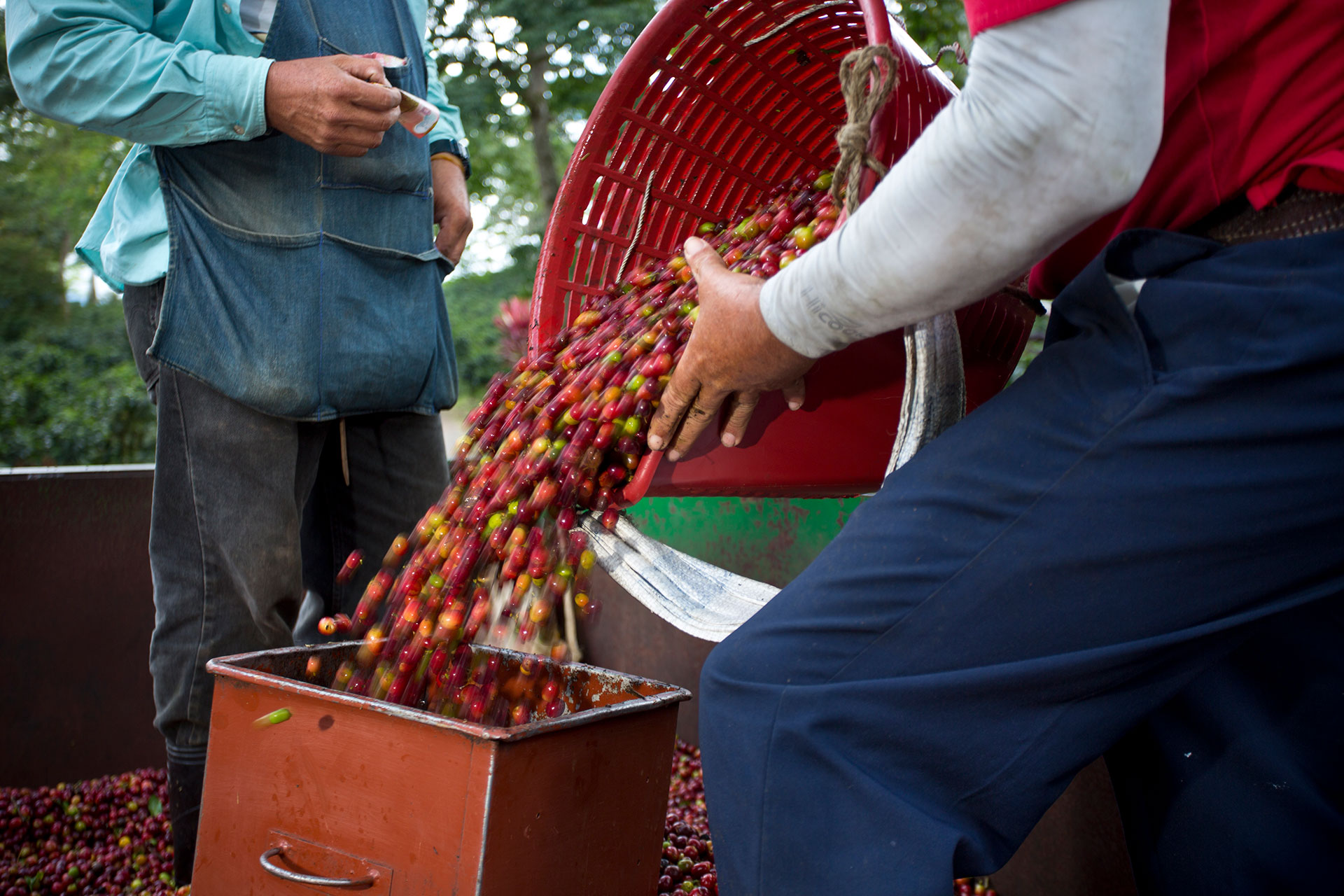
A day trip to either Poás or Irazú Volcano sets the tone for the journey ahead. Poás features one of the world's largest active craters, a turquoise acid lake steaming at 2,708 meters above sea level. Irazú, the tallest volcano in the Cordillera Central at 3,432 meters, offers views that on clear mornings stretch to both the Pacific and Caribbean coasts simultaneously. The drive to either volcano winds through coffee country — rows of arabica bushes climbing steep hillsides, small beneficios where beans are washed and dried, and farming communities that have cultivated these slopes for generations.
Spending your first night in the Central Valley also makes practical sense: it gives your body time to adjust to the altitude and the six-hour time difference from Europe before diving into more physically demanding adventures. Consider visiting one of the region's community coffee tours, where local families walk you through the seed-to-cup process on their own farms, a far more intimate experience than the large commercial operations.
Pacuare River: White Water Through Pristine Jungle
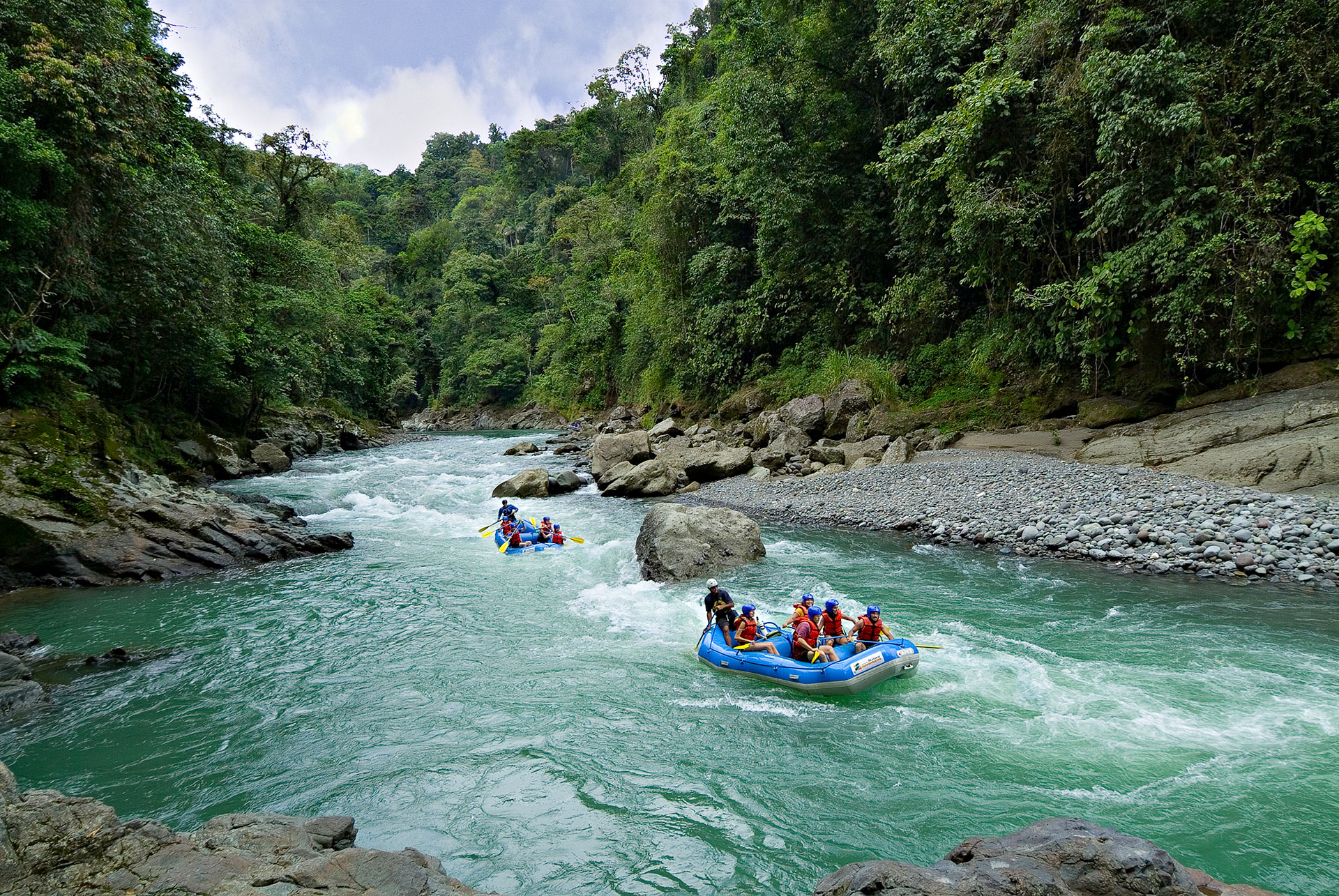
The Pacuare River is consistently ranked among the top five white-water rafting rivers in the world, and for good reason. Flowing 108 kilometers from the Talamanca mountains to the Caribbean lowlands, the Pacuare carves through a primary rainforest canyon so pristine that it has been proposed as a UNESCO World Heritage Site. This is not a theme-park river experience — it is a genuine wilderness corridor where toucans fly overhead, howler monkeys call from the canopy, and waterfalls tumble directly into the river from sheer canyon walls.
The classic section runs Class III to IV rapids, making it thrilling without requiring previous rafting experience. Professional guides manage the technical aspects while you focus on the raw power of the water and the astonishing beauty of the gorge. Between rapids, the river slows into calm stretches where you can float and scan the banks for wildlife — river otters, iguanas basking on rocks, morpho butterflies catching the light. Some travelers report seeing ocelots or tapir tracks along the river's edge during lunch stops on sandy beaches.
For those wanting a deeper immersion, overnight trips include stays at eco-lodges accessible only by raft, perched above the river and powered entirely by solar energy. Waking up in the Pacuare canyon, surrounded by nothing but forest sounds, ranks among the most memorable nature experiences Costa Rica offers. The river is best run between June and October when water levels are optimal, though year-round departures are available with adjusted routes.
Arenal Volcano & Hot Springs
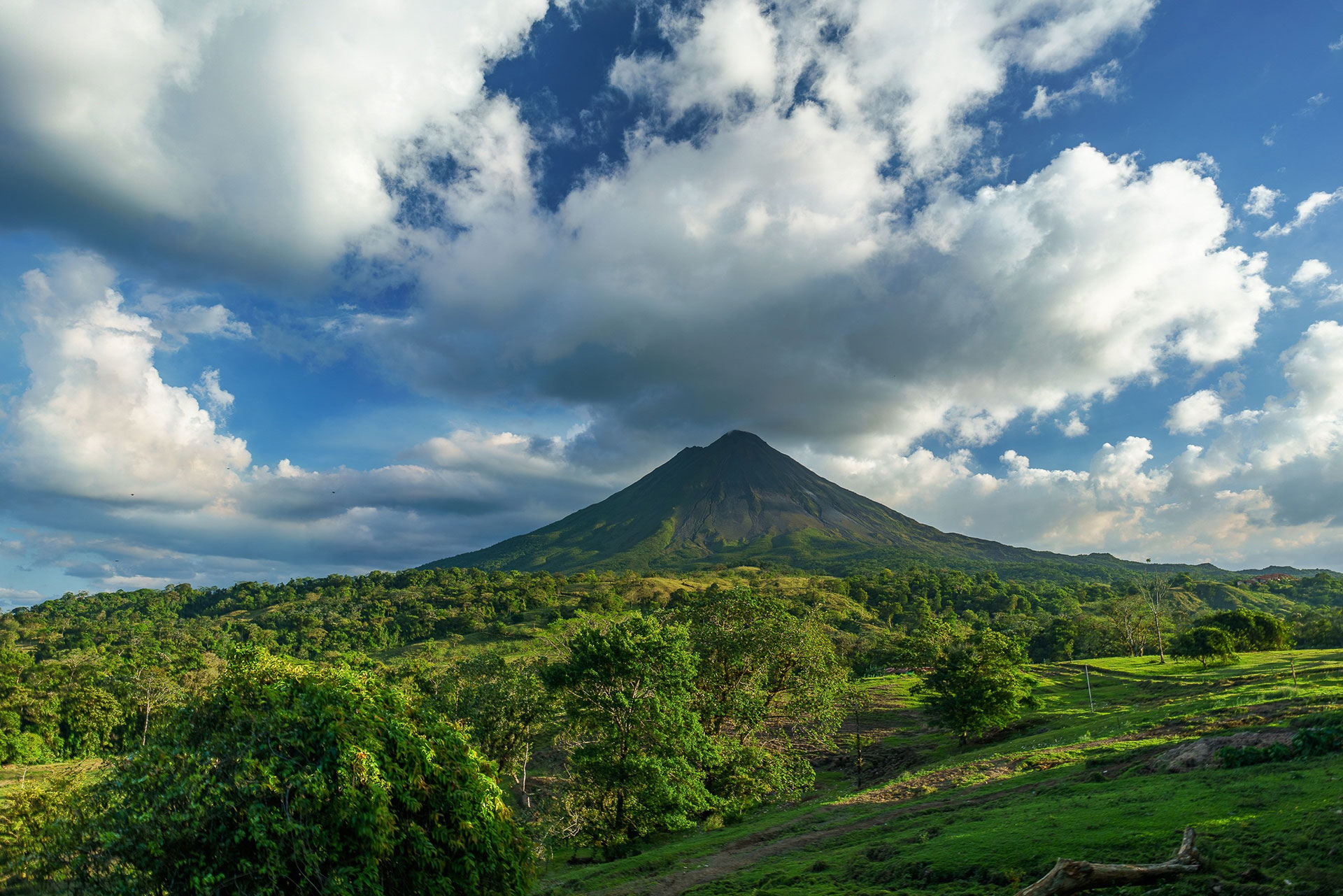
Arenal is the icon of Costa Rican nature travel — a near-perfect volcanic cone rising 1,670 meters above the lowlands of the Northern Plains. Though its last major eruption was in 2010, the volcano's presence dominates every view in the region, its peak often wreathed in clouds that part dramatically to reveal the full silhouette. The town of La Fortuna sits at its base, a hub for adventure activities that range from gentle to adrenaline-fueled.
The geological gift Arenal gives visitors is thermal water. Volcanic heat warms underground rivers that surface throughout the region as hot springs, ranging from intimate natural streams hidden in the forest to world-class resort spas with cascading pools set against volcano views. The experience of soaking in mineral-rich thermal water at dusk, watching clouds drift across Arenal's cone, is one of those travel moments that justifies the entire trip. The water temperatures vary naturally from pool to pool, typically between 37°C and 52°C, and the mineral content — rich in sulfur, calcium, and magnesium — has genuine therapeutic properties.
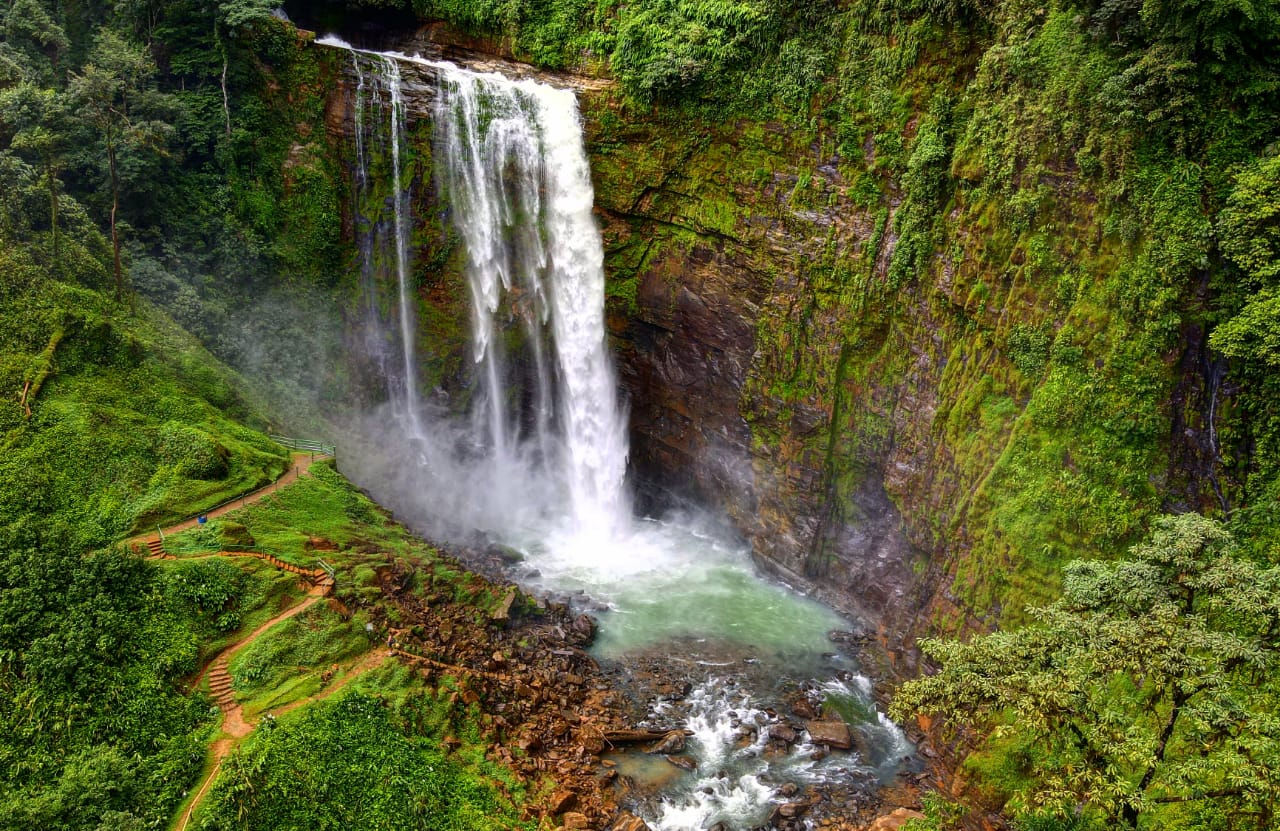
Don't miss La Fortuna Waterfall, a 70-meter cascade that plunges into a pristine swimming hole at the base of a forested ravine. The descent requires navigating about 500 concrete steps, but the reward — swimming in cool, emerald-green water beneath a thundering waterfall framed by tropical vegetation — is worth every step back up. For hikers, the Arenal 1968 trail follows actual lava flows from the volcano's famous eruption, winding through regenerating forest where you can see nature reclaiming volcanic rock in real time.
Río Celeste & Tenorio Volcano National Park
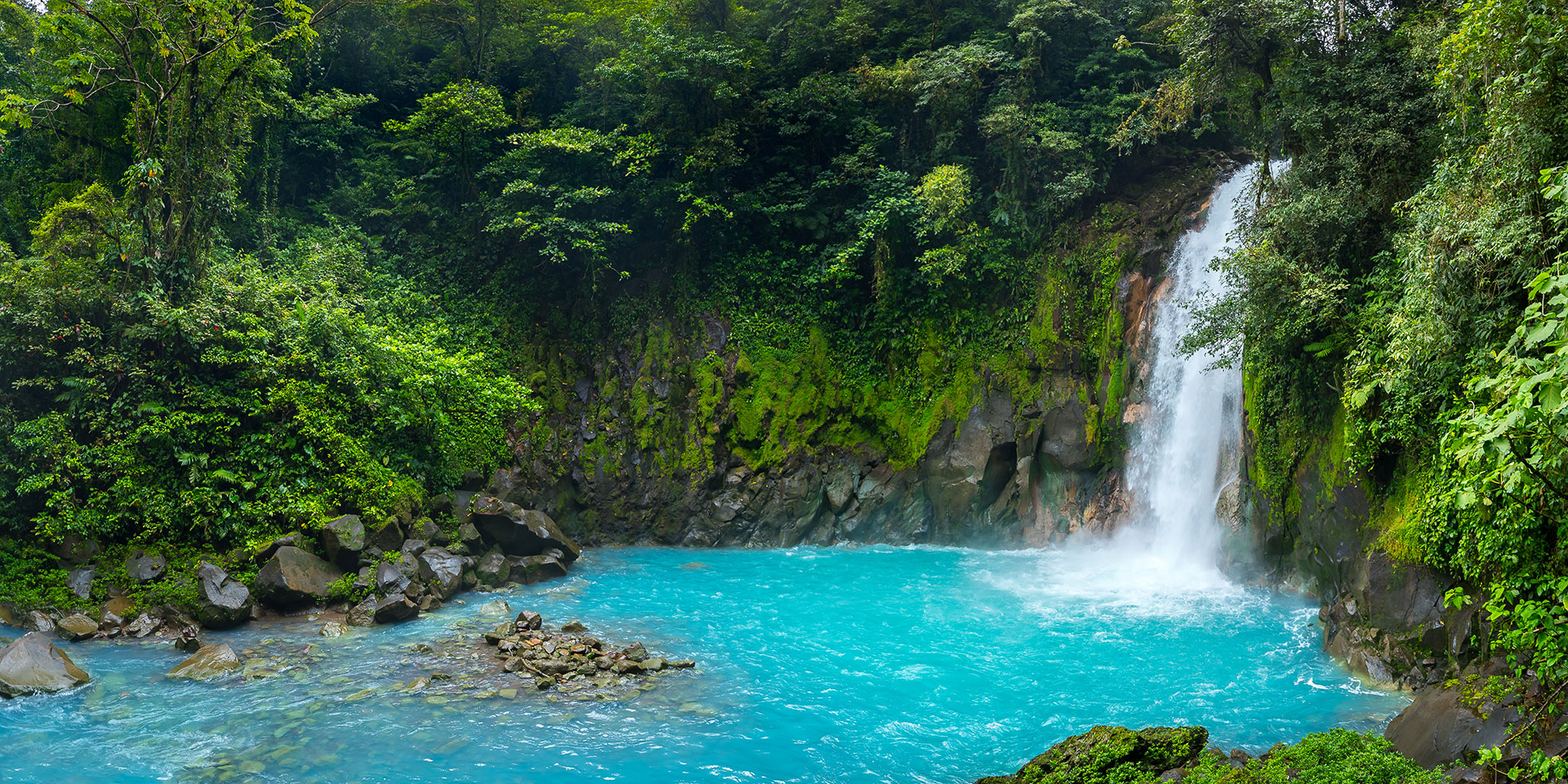
If Arenal is the celebrity volcano, Tenorio is the hidden genius. Located about two hours northwest of La Fortuna, Tenorio Volcano National Park protects 18,400 hectares of virgin rainforest and is home to one of Costa Rica's most photogenic natural phenomena: Río Celeste, the "Blue River." The river's extraordinary turquoise color is not a trick of light or algae. It results from a precise chemical reaction where two clear tributaries — one carrying volcanic minerals (aluminosilicates) and the other acidic volcanic water — converge. The suspended mineral particles scatter sunlight in a way that produces an intense, almost artificially vivid blue.
The main hike through the park follows a well-maintained trail (approximately 6 kilometers round-trip) through dense primary forest to the Río Celeste waterfall, where the blue water drops 30 meters into a pool surrounded by green canyon walls. Along the trail, you'll pass the "Teñideros" — the exact point where the two tributaries merge and the water transforms from clear to blue before your eyes. It's a rare chance to witness a geological process happening in real time. The park also features volcanic hot springs and bubbling fumaroles along the riverbank, reminders that Tenorio remains an active volcano.
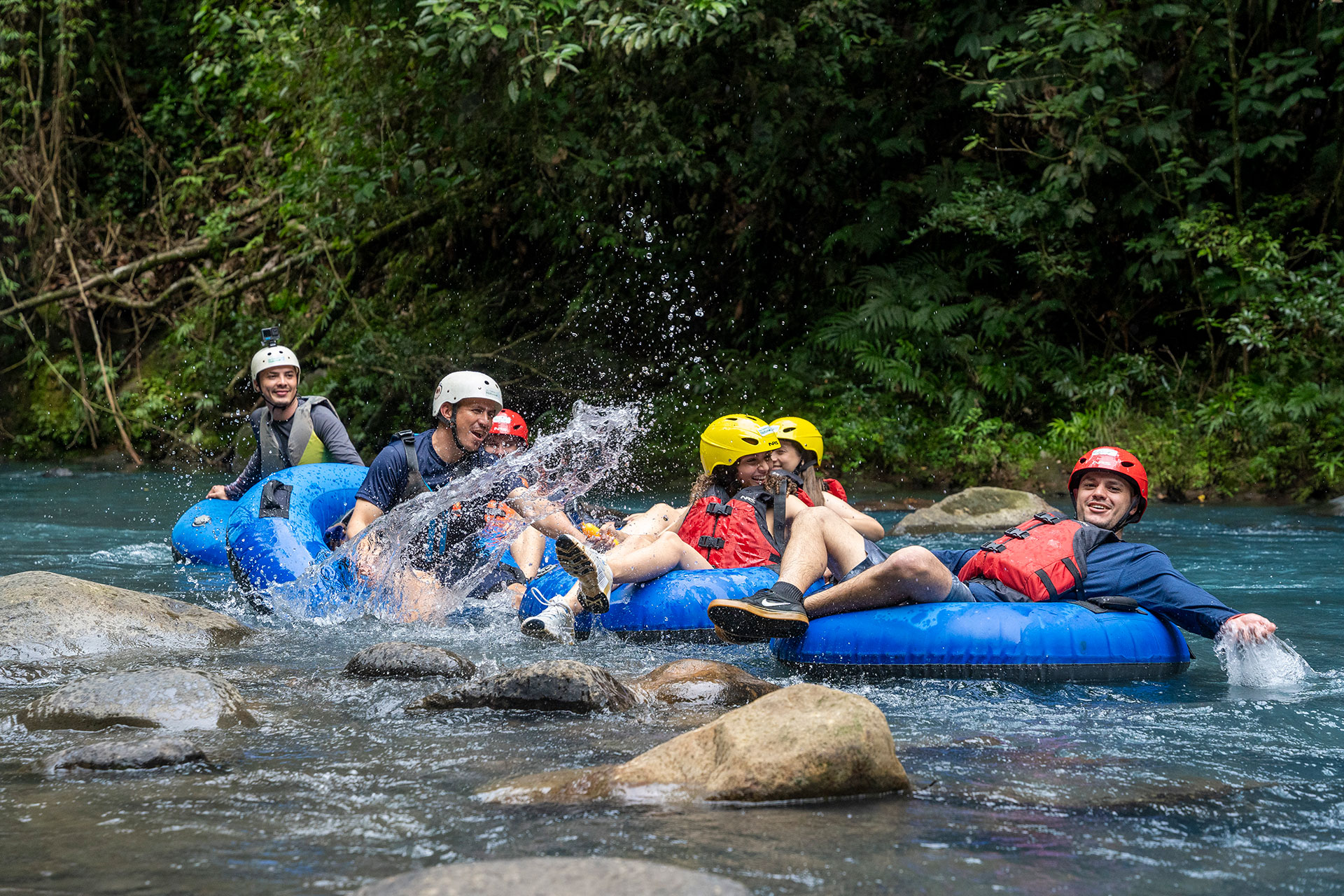
What makes Tenorio special beyond its famous river is its relative solitude. Visitor numbers are capped, and the surrounding area lacks the tourist infrastructure of Arenal, which means fewer crowds and a more authentic sense of wilderness. The birding here is exceptional — Tenorio's elevation range supports both highland and lowland species, and sightings of keel-billed toucans, great green macaws, and various tanagers are common. For a different perspective, river tubing on the calmer stretches of Río Celeste offers a gentle float through the blue waters surrounded by nothing but forest canopy overhead.
Monteverde Cloud Forest
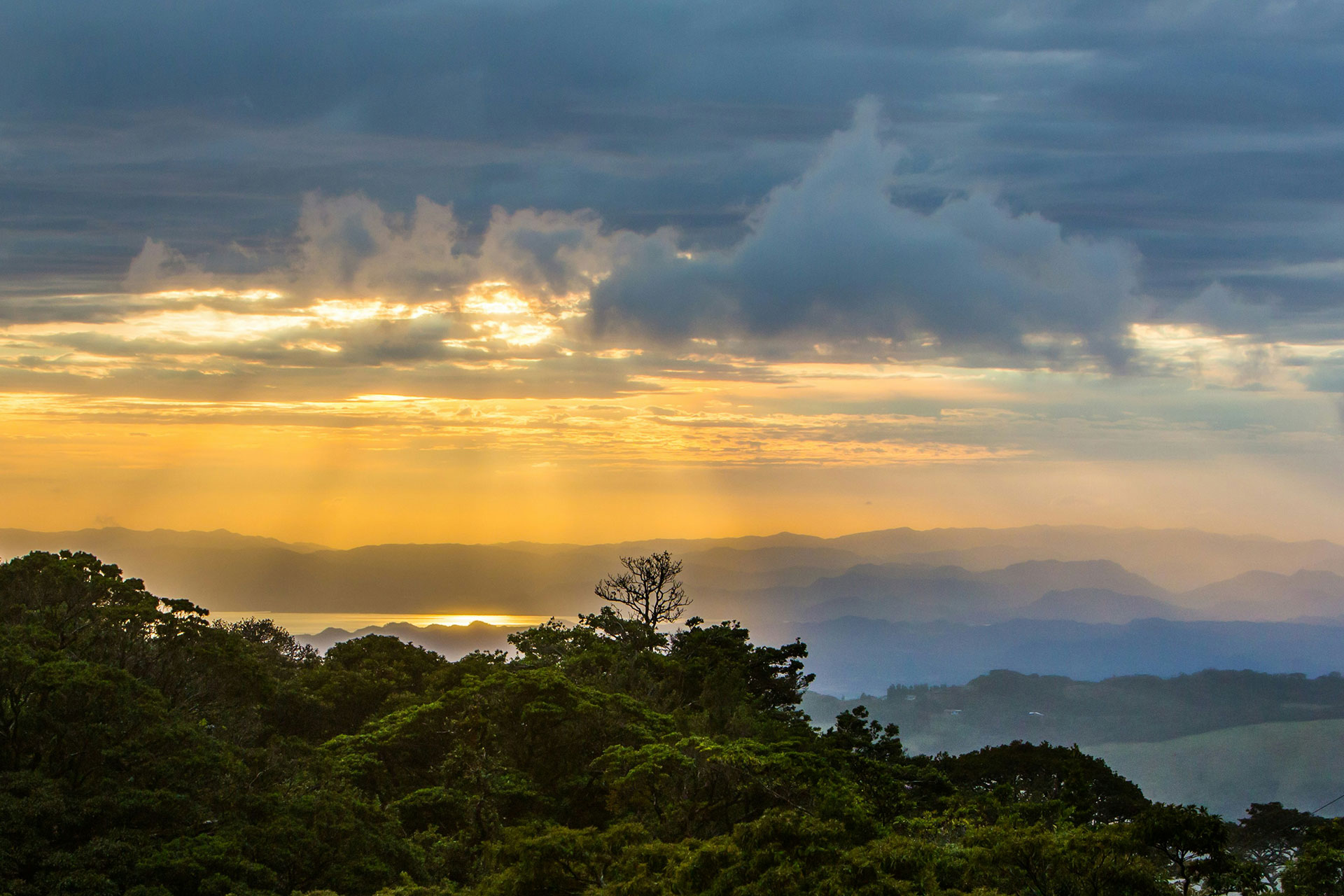
Monteverde exists in a different world. At 1,400 meters, the cloud forest is perpetually draped in mist, creating an ecosystem where moisture hangs in the air, coats every surface in moss and epiphytes, and supports a density of life that feels almost primordial. The Monteverde Cloud Forest Reserve and the adjacent Santa Elena Reserve together protect over 26,000 acres of forest that harbor more than 2,500 plant species, 400 bird species, and 100 mammal species — numbers that rival territories hundreds of times their size.
The hanging bridges and canopy walkways are the signature experience here. Walking at treetop level — some bridges span over 100 meters at heights of 60 meters above the forest floor — gives you access to the canopy layer where most of the cloud forest's biodiversity actually lives. Epiphytes, bromeliads, and orchids cling to every branch, and the air itself feels thick with life. This is one of the best places in Central America to spot the Resplendent Quetzal, the iridescent green-and-red bird that the ancient Maya and Aztecs considered divine. Quetzal sightings peak during the breeding season from February through May, when males display their spectacular tail feathers, but experienced local guides find them year-round.
Night tours reveal an entirely different forest. With headlamps and a naturalist guide, you'll encounter creatures that remain invisible during daylight: red-eyed tree frogs posing on leaves, sleeping hummingbirds tucked into branches, tarantulas emerging from burrows, and if you're fortunate, the shy two-toed sloth navigating the canopy in slow motion. The cloud forest at night is quieter than the daytime jungle but far more intense — every beam of light reveals something alive, and the sounds shift from bird calls to the clicks and chirps of insects and amphibians.
Sensoria: Land of Senses
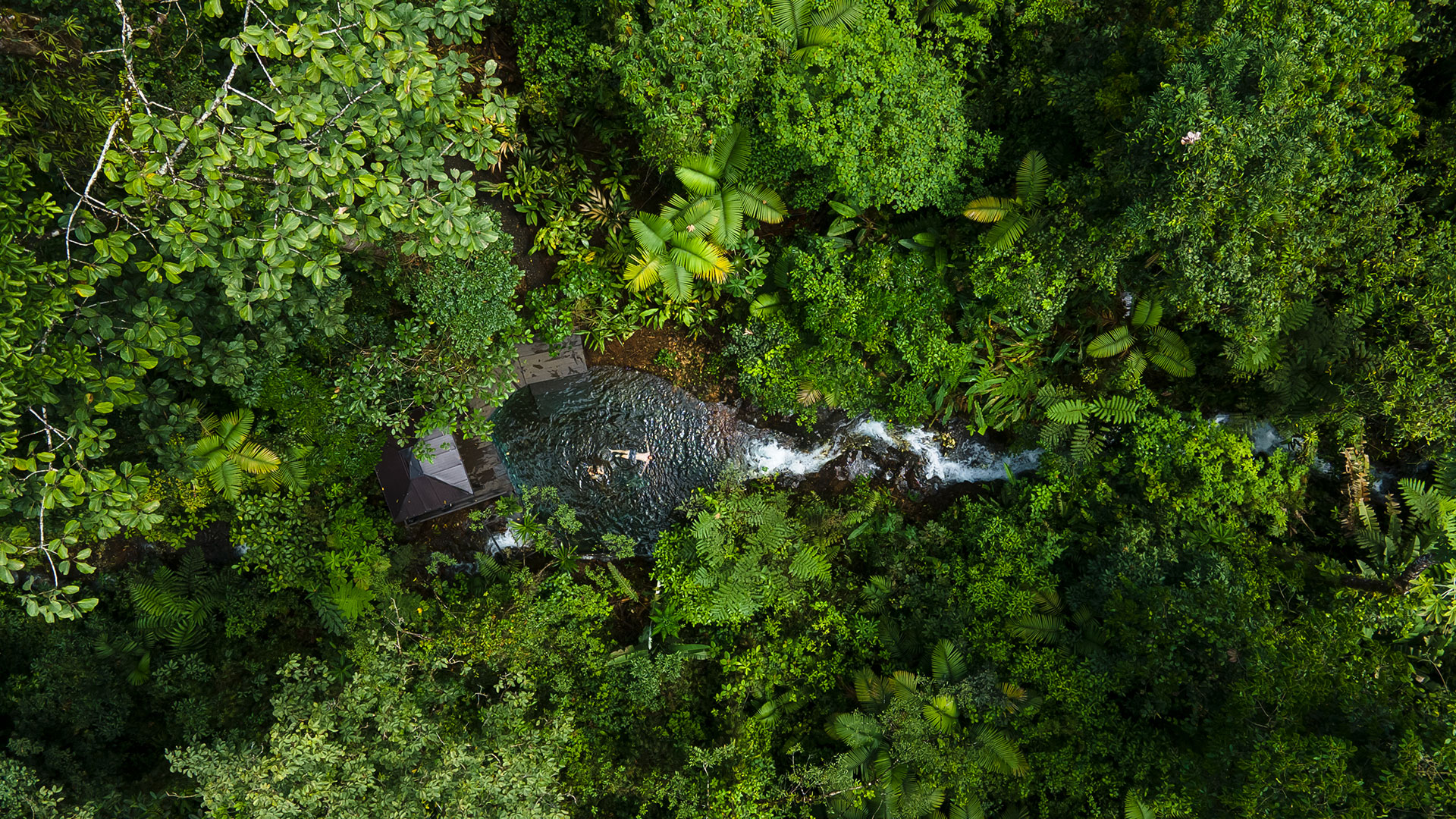
Tucked into the flanks of Miravalles Volcano in the Guanacaste highlands, Sensoria is one of Costa Rica's best-kept secrets — a private ecological reserve built around the concept of sensory immersion in nature. Unlike national parks with their defined trails and ranger stations, Sensoria is designed as an experience: a curated walk through primary forest that leads to a series of hidden waterfalls and volcanic hot springs, each revealed gradually as the trail winds deeper into the landscape.
The reserve protects 1,000 acres of forest fed by the volcanic hydrothermal system of Miravalles, which means you'll encounter both cool waterfall pools and warm mineral springs within the same trail loop. There are eight waterfalls along the route, each with its own character — some thundering into deep pools perfect for swimming, others delicate cascades threading through moss-covered rocks. The hot springs emerge naturally from the forest floor, their temperatures regulated by volcanic activity below, and visitors are encouraged to soak in them as part of the experience. No concrete pools, no piped water — just the forest, warm mineral water, and silence.
What elevates Sensoria beyond a beautiful hike is the intentionality of the design. Visitor numbers are strictly limited, the trail infrastructure is minimal and organic, and there is no music, no loudspeakers, no commercial distractions. The reserve was created specifically to let nature speak for itself, and it succeeds. The combination of volcanic geology, primary forest, waterfalls, and thermal springs in a single, uncrowded trail makes Sensoria one of the most complete nature experiences in the country — and one that most visitors to Costa Rica never hear about. We consider it essential for any nature-focused itinerary.
Manuel Antonio: Where Rainforest Meets the Sea
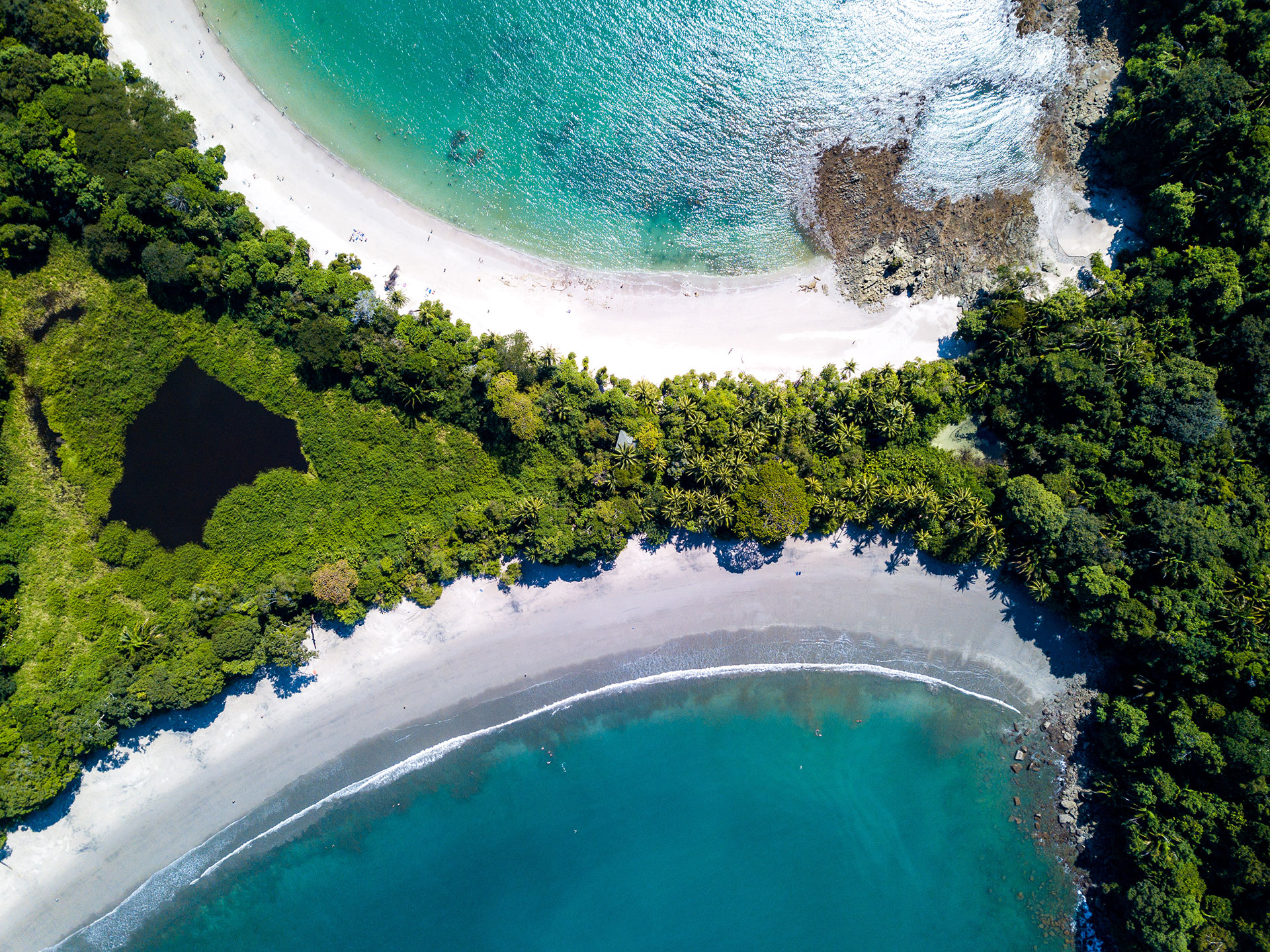
Manuel Antonio National Park is Costa Rica's smallest national park at just 1,983 hectares, but it packs an extraordinary amount of biodiversity into its compact territory. Here, the rainforest literally walks into the ocean — trails wind through dense canopy and emerge onto white-sand beaches framed by rocky headlands, with the warm Pacific lapping at the forest's edge. This is one of the only places in the world where you can watch a troop of white-faced capuchin monkeys swinging through the trees above your beach towel, or spot a three-toed sloth dozing in a cecropia tree while iguanas bask on sun-warmed rocks meters from the shoreline.
Beyond the beaches, Manuel Antonio's surrounding region holds some excellent waterfall experiences that most visitors miss. The Eco Chontales waterfall complex, located in the mountains above the coast, offers a series of cascades through private rainforest with natural swimming pools — a perfect half-day excursion that contrasts the coastal environment with highland jungle. The area's biodiversity is remarkable for a Pacific coast location: 109 mammal species and 184 bird species have been recorded within the park and its buffer zones, including the endangered Central American squirrel monkey, found in the wild only in this small stretch of Costa Rica's Pacific coast and a narrow corridor of Panama.
Manuel Antonio works beautifully as the final stop on a nature itinerary because it offers a gentler rhythm after the inland adventures. Mornings can be spent on early guided walks through the park — the best time for wildlife sightings, before both the heat and the crowds arrive — while afternoons invite relaxation on the beach or kayaking through the mangrove estuaries that line the coastline. It's the kind of place where nature doesn't demand effort; it simply surrounds you.
"In every walk with nature, one receives far more than he seeks." — John Muir. In Costa Rica, this truth multiplies. Every trail, every river, every volcanic slope holds something you didn't expect to find — and that element of surprise is what turns a trip into a transformation.
Day-by-Day Summary
Here is a condensed overview of how this 10-day nature itinerary flows across Costa Rica's most dramatic landscapes. Each day builds on the last, moving through different elevations, ecosystems, and types of natural wonder.
| Day | Region | Highlights |
|---|---|---|
| Day 1 | San José / Central Valley | Arrival, settle in, coffee community tour |
| Day 2 | Central Valley | Poás or Irazú Volcano day trip, highland birdwatching |
| Day 3 | Pacuare River | Class III-IV white-water rafting through jungle canyon |
| Day 4 | Arenal / La Fortuna | Transfer to Arenal, La Fortuna Waterfall, hot springs evening |
| Day 5 | Arenal / La Fortuna | Arenal 1968 lava trail hike, hanging bridges, thermal rivers |
| Day 6 | Río Celeste / Tenorio | Tenorio National Park hike, Río Celeste waterfall, tubing |
| Day 7 | Sensoria / Miravalles | Sensoria reserve — waterfalls, volcanic hot springs, forest trails |
| Day 8 | Monteverde | Cloud forest hanging bridges, canopy walkways, night tour |
| Day 9 | Manuel Antonio | Transfer to the coast, Eco Chontales waterfall, beach sunset |
| Day 10 | Manuel Antonio | Early morning national park guided walk, wildlife, departure |
Practical Tips for Your Nature Itinerary
Best season: Costa Rica's green season (May through November) is actually ideal for nature travelers. Mornings are typically clear, rain arrives in the afternoon, waterfalls are at their most powerful, and landscapes are at their lushest. The dry season (December through April) offers more predictable weather but larger crowds and drier waterfalls. For the best balance, consider the shoulder months of May, June, November, or early December — fewer visitors, green scenery, and active rivers.
What to pack: Layers are essential on this itinerary because you'll move between sea level and 3,400 meters. Bring a lightweight rain jacket (useful year-round), quick-dry hiking pants, sturdy closed-toe shoes with grip for waterfall trails, water shoes for river activities, and a warmer layer for Monteverde and the volcano summits where temperatures can drop below 15°C. Binoculars dramatically improve wildlife encounters, and a dry bag protects electronics during river activities.
Altitude changes: This itinerary spans from sea level at Manuel Antonio to over 3,400 meters at Irazú Volcano. While altitude sickness is rare in Costa Rica (the peaks are brief visits, not overnight stays), the temperature swings are real. Expect 32°C on the coast and 8°C at the highest volcanic craters, sometimes in the same day. Hydration is important at every elevation, and the humidity of the lowland forests can be physically demanding if you're not accustomed to tropical heat.
Private vs. group tours: For nature-focused travel, private tours make a significant difference. A private naturalist guide adjusts the pace to your group, waits for the toucan to land instead of rushing to the next stop, and knows the specific trees where sloths have been spotted that week. Group tours operate on fixed schedules that often miss the best wildlife windows. All Wiköl itineraries are 100% private, with bilingual guides who are certified naturalists — the kind of people who can identify a bird by its call and know exactly which branch to point your binoculars toward.